My Recent Work

Content Production

Much of my job duties revolve around content production. As a content producer, I create 10–15 original pieces of content each week for Spectroscopy's audience of analytical science professionals. My work centers on writing industry news articles that highlight the latest trends, breakthroughs, and developments in analytical spectroscopy, as well as recapping recently published studies into accessible, engaging single-topic news stories. My content portfolio is diverse in format, spanning traditional news articles, listicles, video interviews, and text-based Q&As, ensuring our audience can engage with complex scientific information in a variety of ways.

To maintain this high output while upholding editorial quality, I strategically leverage AI tools including ChatGPT, Claude, and Gemini to assist with sourcing, outlining, and editing content. By combining journalistic rigor with modern AI-assisted workflows, I consistently deliver accurate, timely, and insightful coverage that keeps Spectroscopy's readership informed and engaged with the rapidly evolving field of analytical science.

Explore a featured selection of my writing work below. You can view my author profiles by clicking the "Home" button on top of the screen.

Integrating Chemometrics with Raman Spectroscopy in Forensics | Spectroscopy Online

At Pittcon 2026 in San Antonio, Texas, Igor Lednev, a Distinguished Professor and Williams-Raycheff Endowed Professor at the University at Albany, State University of New York, presented his ongoing research in forensic analysis.1 As part of Spectroscopy magazine’s coverage of this conference, we sat down with Lednev to ask him about his research and the latest trends and developments that he is observing in spectroscopy and analytical science.Our conversation with Lednev concentrated on how adv...


The Role of Spectroscopy in Modern Agriculture | Spectroscopy Online

Agriculture is an important industry globally. This industry is responsible for producing the food and bio-based materials that support several key industries as well as human life. Currently, innovations in crop science, precision farming, and sustainable practices are contributing toward solving some of the most pressing issues the world is facing. Some of these issues include climate change, resource conservation, and ecosystem health. The sector also supplies inputs for pharmaceuticals, text...

Looking Ahead at 2026: The Biggest Trends in Spectroscopy | Spectroscopy Online

It has been a challenging year in spectroscopy. As economic pressures mount, skills gaps widen, and artificial intelligence (AI) accelerates, spectroscopists are navigating new challenges while reimagining traditional techniques to advance their research.Next year promises an ongoing acceleration of these trends for spectroscopists. In this article, we highlight some specific trends for spectroscopists to keep an eye on heading into 2026.Currently, there is an ongoing trend involving using spect...

Quantifying Microplastics and Anthropogenic Particles in Marine and Aquatic Environments | Spectroscopy Online

Microplastics and anthropogenic particles are ubiquitous in the environment. The presence of these contaminants can pose challenges to ecosystems and the creatures that live there. A recent study published in Frontiers in Toxicology explored this topic, focusing specifically on marine and aquatic environments (1). This study was conducted by Elise Granek, Susanne Brander, Summer Traylor, and Marilyn Duncan. Recently, three of the authors sat down with Spectroscopy to discuss their research.The t...

Lithium Metal Batteries and the Push for More Sustainable Electronics | Spectroscopy Online

Lithium metal batteries, a key component in many appliances and electronics, contribute to global sustainability. Using batteries to power electronic devices can help reduce carbon footprint and reliance on fossil fuels.Currently, there is a push to make batteries last longer and operate more effectively. This is motivated by the call for more affordable modes of transportation and effective electronic devices. Because of this more scientists are investigating lithium metal batteries using analy...

Inside the Analytical Laboratory of the Past, Present, and Future | LCGC International

The laboratory is considered one of the most important locations for the education of early-career analytical scientists. It stimulates their scientific interests, trains them in observation, and provides them with the knowledge needed to conduct scientific research (1). It’s also a place of discovery, where scientists work to address some of the world’s most pressing problems.In many ways, the laboratory is an intricately woven square in the patchwork quilt of scientific innovation. Without tha...

The 2023 Spectroscopy Employment and Salary Survey: Is a Recession Looming—Or Even Already Here? | Spectroscopy Online

The past year was a unique and challenging one for spectroscopists. With talk about a global recession—and several countries already reporting economic recessions—greater uncertainty in the job market was on the mind of many. For this 2023 edition of our annual salary and employment survey, we gathered information about average salaries and compared those numbers to previous years. We also addressed broad trends in the global economy, asking respondents to offer their thoughts on whether they th...

Using Portable X-ray Fluorescence Spectrometry (PXRF) to Explore the Origins of the Sarsen Megaliths at Stonehenge | Spectroscopy Online

Stonehenge is a prehistoric monument that is considered a British cultural icon and one of the most famous landmarks in Europe. The origin of the sarsen megaliths that comprise Stonehenge have interested archaeologists for decades. What can spectroscopic techniques, such as portable X-ray fluorescence spectrometry (PXRF), reveal about the sarsen megaliths and where they originated? David Nash, a professor of physical geography at the University of Brighton in Brighton, United Kingdom, is explori...

Social Media Experience

As part of my job duties, I grow Spectroscopy Magazine's brand presence across Facebook, X (formerly Twitter), and LinkedIn, ensuring consistent and engaging content that aligns with organizational goals. I craft compelling copy tailored to each platform's audience and produce eye-catching visuals and multimedia content using tools such as Canva, Vizard, and iMovie to elevate post performance and audience engagement.

I work cross-functionally with the Marketing team to develop and execute cohesive social media strategies that support broader business objectives. My workflow includes organizing and submitting content through Notion and scheduling posts via HubSpot to maintain a consistent publishing cadence. I also leverage AI tools to streamline and enhance content creation, staying ahead of evolving digital trends.

Through a combination of creativity, strategic thinking, and technical proficiency, I help build a strong, recognizable online presence that connects with and grows our target audience.

To the right, I have included a couple of recent examples of the social media posts that I collaborated with Marketing on, which has led to a 11% increase in brand recognition over the past month.

Conference Coverage

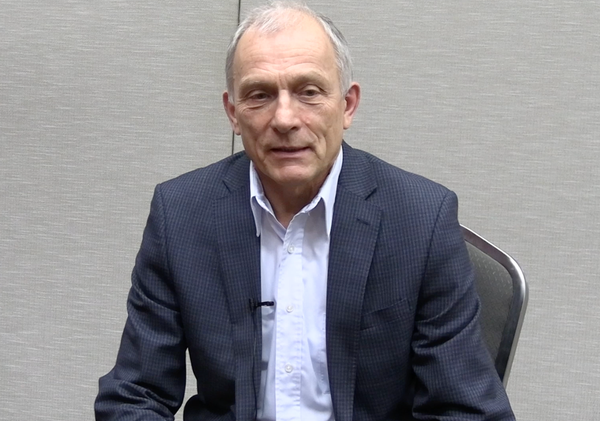
As one of LCGC International's and Spectroscopy's dedicated content representative at major trade shows and conferences, I serve as the brand's eyes and ears on the ground, delivering real-time coverage of key industry events. My responsibilities include attending award sessions, technical symposiums, and networking events to capture the latest developments shaping the field. A core component of my conference role involves interviewing up to 10 key opinion leaders (KOLs), transforming those conversations into compelling video content published directly on Spectroscopy's website. Through on-site reporting and multimedia storytelling, I help connect Spectroscopy's audience with the ideas, innovations, and voices driving the industry forward.

On the "About" page, you can see a photo of me at the SciX 2025 Conference, giving a brief introductory speech about Spectroscopy's Emerging Leader in Molecular Spectroscopy Award recipient.

Below is a sampling of some of the conferences I attend each year. You can view more of my conference coverage by clicking on the below links.

Pittcon

SciX

Winter Conference on Plasma Spectrochemistry

Project Management

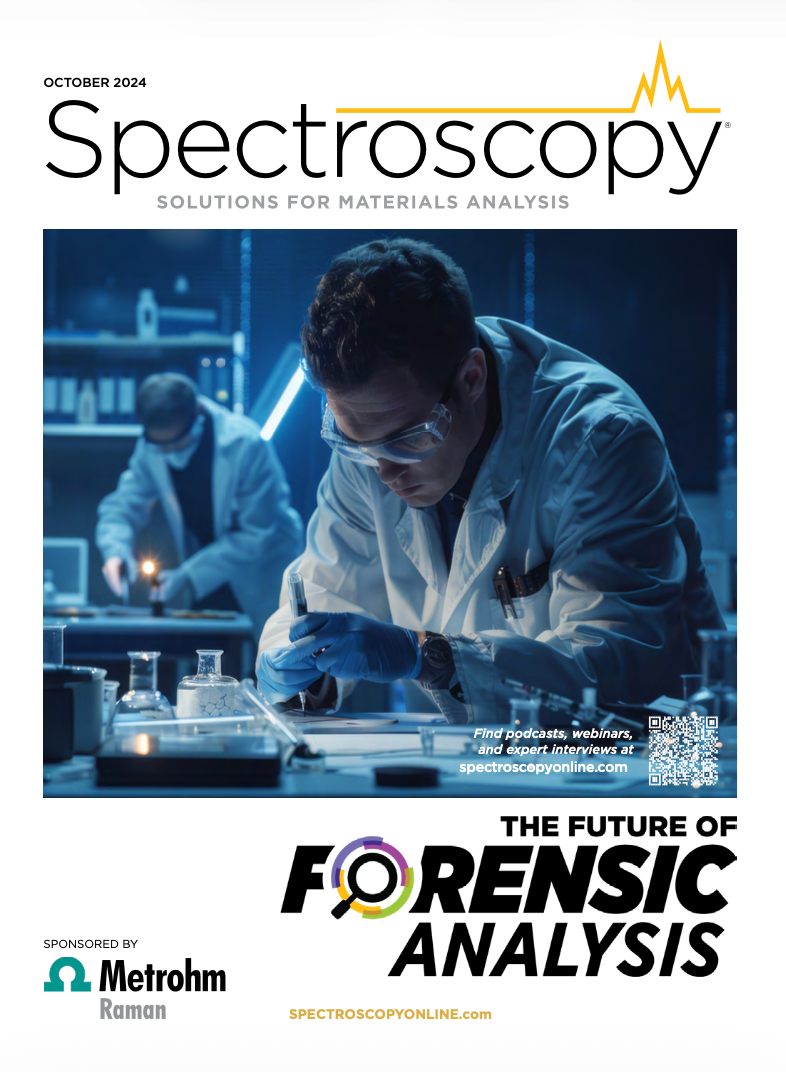
As part of my job responsibilities, I manage, produce, and execute numerous end-to-end content series and topic takeovers for LCGC and Spectroscopy, overseeing each project from concept to completion. Each series typically features a combination of exclusive key opinion leader (KOL) interviews and in-depth recaps of recent studies, supported by dedicated landing pages that serve as centralized content hubs. I collaborate cross-functionally with Marketing to drive social media promotion and lead generation, and with the Creative team to develop custom logos and branding that give each series a distinct identity. I also produce preview videos to build anticipation and maximize audience reach.

My work has delivered measurable results, including "The Future of Forensic Analysis," which generated revenue through sponsorships, and "Spectroscopy and Archaeology," which produced a 43% increase in page views over the course of the series. These successes reflect my ability to manage complex, multi-faceted projects that drive both engagement and business value.

E-Newsletter Production

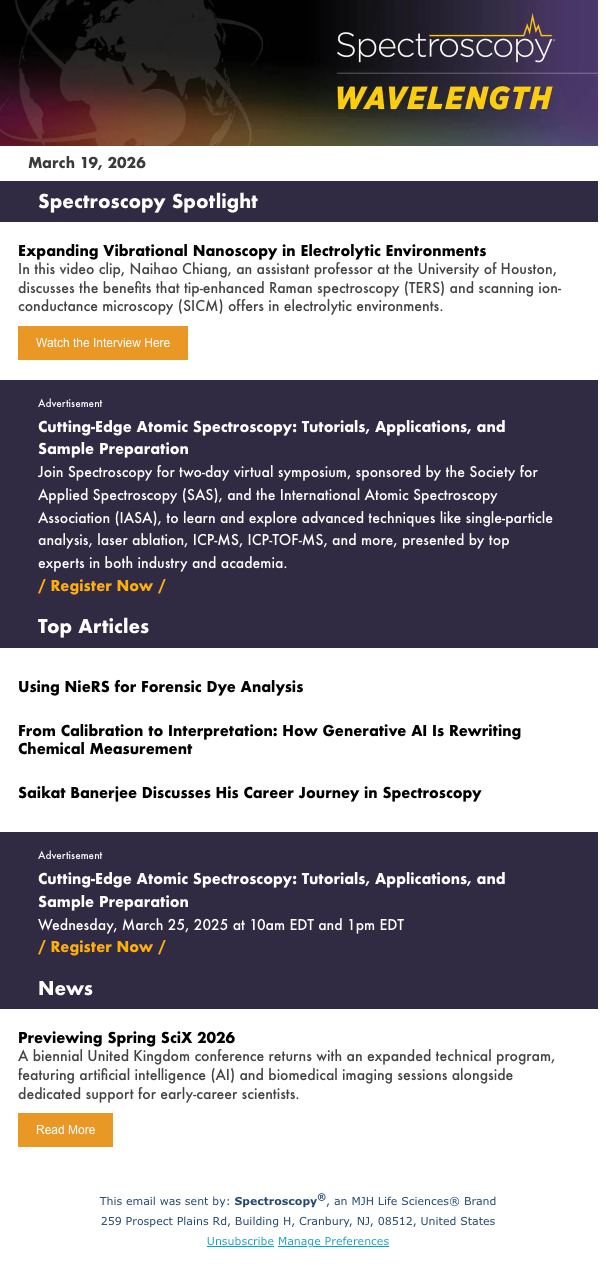
As part of my job responsibilities, I oversee the production of two weekly e-newsletters for Spectroscopy, known as Wavelength e-newsletters, managing the full workflow from content curation to deployment. Using Google Analytics (GA4) and audience engagement data, I strategically select top-performing articles that resonate with our readership and drive meaningful interaction. I collaborate closely with the Email newsletter team to verify that all links function correctly and that each issue reaches the appropriate target audience as specified in Workfront. Throughout the process, I manage tight deadlines with precision to ensure timely and consistent deployment, delivering a reliable and high-quality newsletter experience to Spectroscopy's audience week after week.

You can view an image of a recently deployed Wavelength e-newsletter to the right.